It was suggested to me that I would benefit from seeing the Robert Rauschenberg exhibition at Tate Modern so I decided to take a train down to London to visit a few different galleries. The University very kindly gave me a spare ticket they had for both Tate shows and recommended a few other places to visit.
Robert Rauschenberg
Tate Modern
Time of abstract expressionism
New forms of art making that moved freely among media and methods
Refused to accept conventional boundaries
Paintings cannot be solely about art or life, his work was intended to show somewhere in the middle
Themes of his art 'multiplicity, variety and inclusion"
Boundless curiosity
Questioning and reconfiguring the possibilities of art in a modern age
Room 1: Experimentation
Beginning of his career: interested in photography
Went to Black Mountain College - unconventional institution
Josef Ablers, encouraged students to work with the natural properties of everyday materials
Recorded imprints of the human body
All black and all white paintings tested the limits of abstraction
 |
| Untitled (Black Painting) [1951] |
Enamel and paper on four canvas panels
Resisted any reference to recognisable imagery
Soaked newspaper in black paint and applied to canvas
Avoided relationship between paintbrush and canvas
Contrast to Rothko and Newman - carefully painted
 |
| Untitled [1952] |
Made up of paint, camera film, cola bottle crate, mirror
Bridging the gap between painting and sculpture
 |
| White Painting [1951] |
House paint
Pristine - John Cage: panels became "airports for lights, shadows and particles"
Cabinet of many small sculptures, all incorporating ideas of the everyday - feathers, thorns, snail shells etc
 |
| Automobile Tire Paint [1953] |
 |
| Erased De Kooning Drawing [1953] |
Wanted to know if a drawing could be made out of erasing
Bold, audacious for the time, De Kooning very famous
Room 2: Colour
Red Paintings brought outside world into his work
Newspaper and comic srtrips - drew upon pre-exisiting colour scheme
Introduced variety of found objects, ensuring no single element dominated
 |
| Dirt Painting (For John Cage) [1953] |
 |
| Untitled (Gold Painting) [1955] |
Break from older abstract generation
Animating spirit.. contagious and intoxicating
Embarked on a series with the 'most challenging colour': red.
Bringing outside world into his work
Black and white paintings often mistaken for gestural and anti-paintings
Collaborative with musicians and dancers
 |
| Charlene [1954] |
Rather than representing a subject, it includes a variety of real objects and materials. Size a relation to human scale
Collapse division between the space of the viewer and the painting
Mirror, light bulb, panels, comic strips, drips, collage, fabric
 |
| Yoicks (Red Painting) [1954] |
2 canvas panels, framed
Room 3: Combines
paintings that became 'physically awkward' by adding objects
discarded materials and abstract paint marks
Previous artists had used everyday objects in their work, but often they were to represent something else, Rauschenberg intended the object to be itself
Confidence grew and so did the combines
Works became more theatrical due to connections with dancers and musicians eg radios, alarm clocks, fans, live paintings
 |
| Short Circuit [1955] |
Jasper Johns and Susan Weil snuck into Stable Gallery exhibition after being rejected.
 |
| Bed [1955] |
Nail polish, toothpaste
Used a quilt given to him as couldn't afford canvas
Pattern dominated composition
Added abstract painterly gestures
People described it as unsettling and agressive, Rauschenberg thought it was one of his friendliest pieces
 |
Factum I [1957]
Factum II [1957] |
Painted simultaneously
"Copies"
Interested in the role of 'accident' in his work
Wanted to see how different and in what way would be two different paintings that looked much alike
Neither one was an imitation of the other
 |
| Untitled [1955] |
Used everyday materials
Sock and parachute
Created on stage in front of live audience
 |
| First Time Painting [1961] |
Same performance, Saint Phalle invited someone to shoot at her work
Back of Rauschenbergs canvas faced the audience
Microphone attached to easel to amplify brush strokes
Stopped painting when alarm clock embedded into canvas went off
Unveiled the next day
 |
| Pantomime [1961] |
Couldn't find a good image online, gestural brushstrokes on canvas, two fans sticking out
Bold, red, drips, layers, paper
 |
| Ace [1962] |
Majestic scale
5 separate panels
Blocks of colour
 |
| Gold Standard [1964] |
Instead of answering interview questions, created a combine live
Japanese folding screen
Marked the end of combines
 |
| Black Market [1961] |
Layed a box on the ground and allowed audience to take and replace objects, add comments and drawings to clip boards on canvas
In amsterdam visitors only stole the objects, did not replace so the offer was furthermore rejected
Room 4: Transfer Drawings
Applying lighter fluid to a magazine clipping and rubbing the back of it would transfer onto another sheet of paper
Mid 70s started transfering onto fabrics
Exploration of the line between mark-making and erasure
 |
| Glacier |
Layered thin fabric
 |
| Almanac Series [1962] |
Layers of paper clippings
Mini combines but on paper
 |
| Retroactive [1964] |
Admirer of JFK
Few weeks before assasination but encouraged to still present it
Embodies optimism and tragedy of 60's
 |
| Tracer [1964] |
Mostly made from mass media
 |
| Scanning [1963] |
Included Rasuchenberg's own photo of a dance piece
Room 7: Technology
interaction between engineers, artists and industry
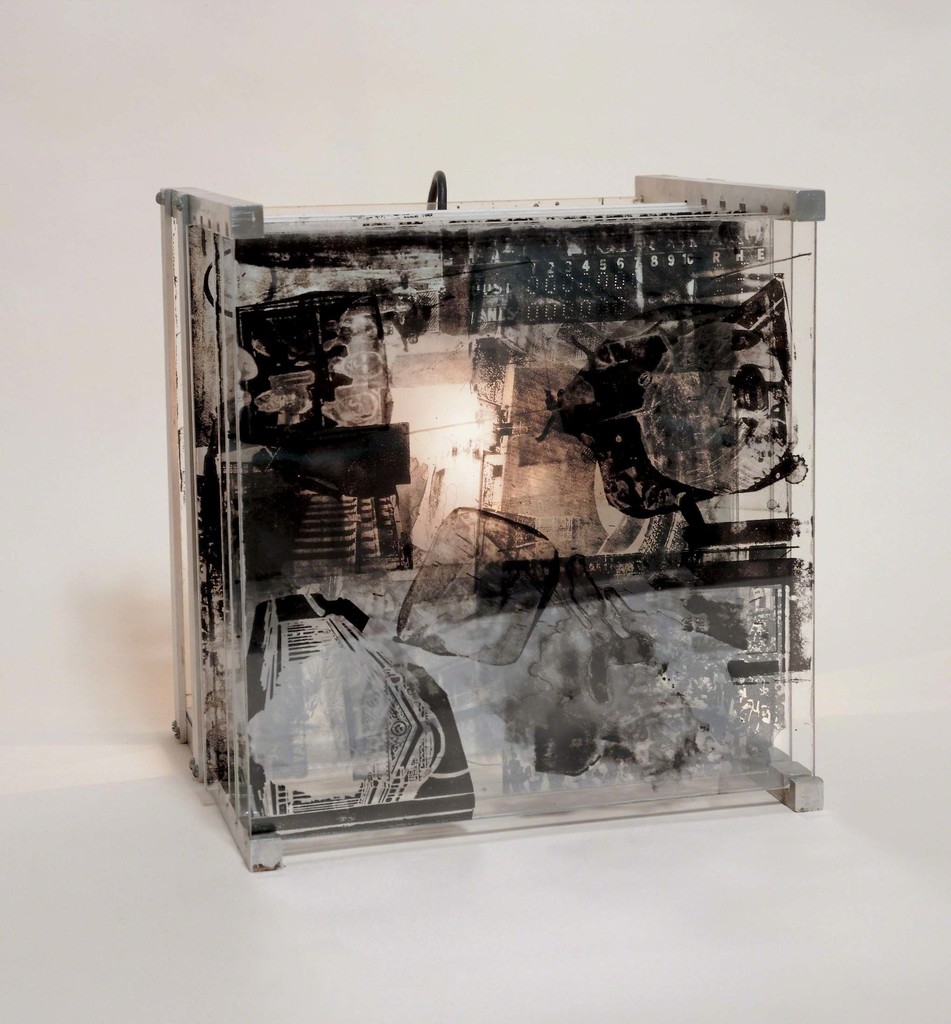 |
| Shades [1964] |
Layers of perspex
Illuminated from behind
Can be endlessly reconfigured
 |
| Oracle [1962-5] |
5 concealed radios
Part found assemblage - car exhausts, doors
Radio's were playing current music, questions time - weird to see piece made in 60's playing bruno mars
 |
| Mud Muse [1968-71] |
large metal tank filled with 1000 gallons of clay mixed with water
Mud bubbling
Each time the bubbles are in the same place but each time they will be different - similarity to my painting style
 |
| Moon Museum [1969] |
First works of art to travel to the moon
Room 8: Material Astraction
After the recent high-tech installations, began creating artworks of a simplicity
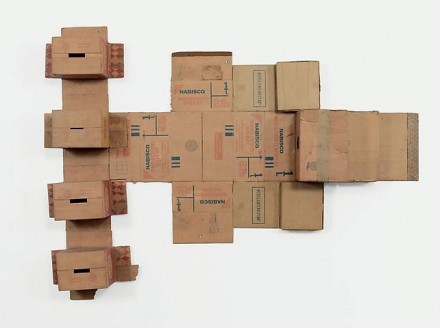
series of sculptural works - used cardboard - relate to minimalist sculpture of the time
Love for colour and texture of silk
 |
| Nabisco Shredded Wheat [1971] |
 |
| Albino (Jammer) [1975] |
Room 9: Travel
Became aware of many restrictions placed on chinese citizens, created series of work in response, artistic dialogues with countries from around the world
Travelled to mexico, japan, Tibet, China, Chile, Cuba etc
Exhibition of work in response to each location
 |
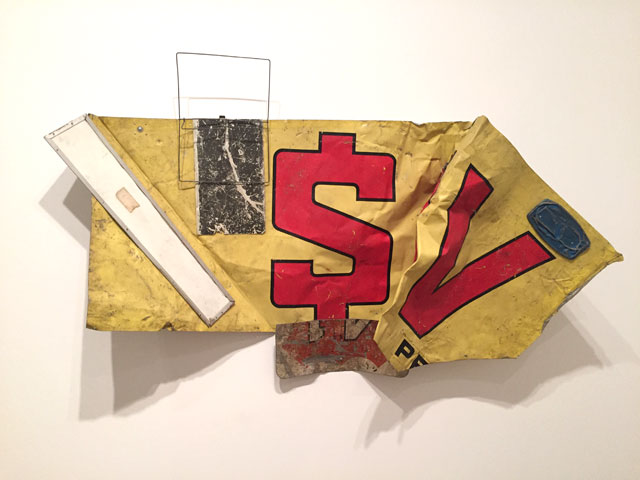
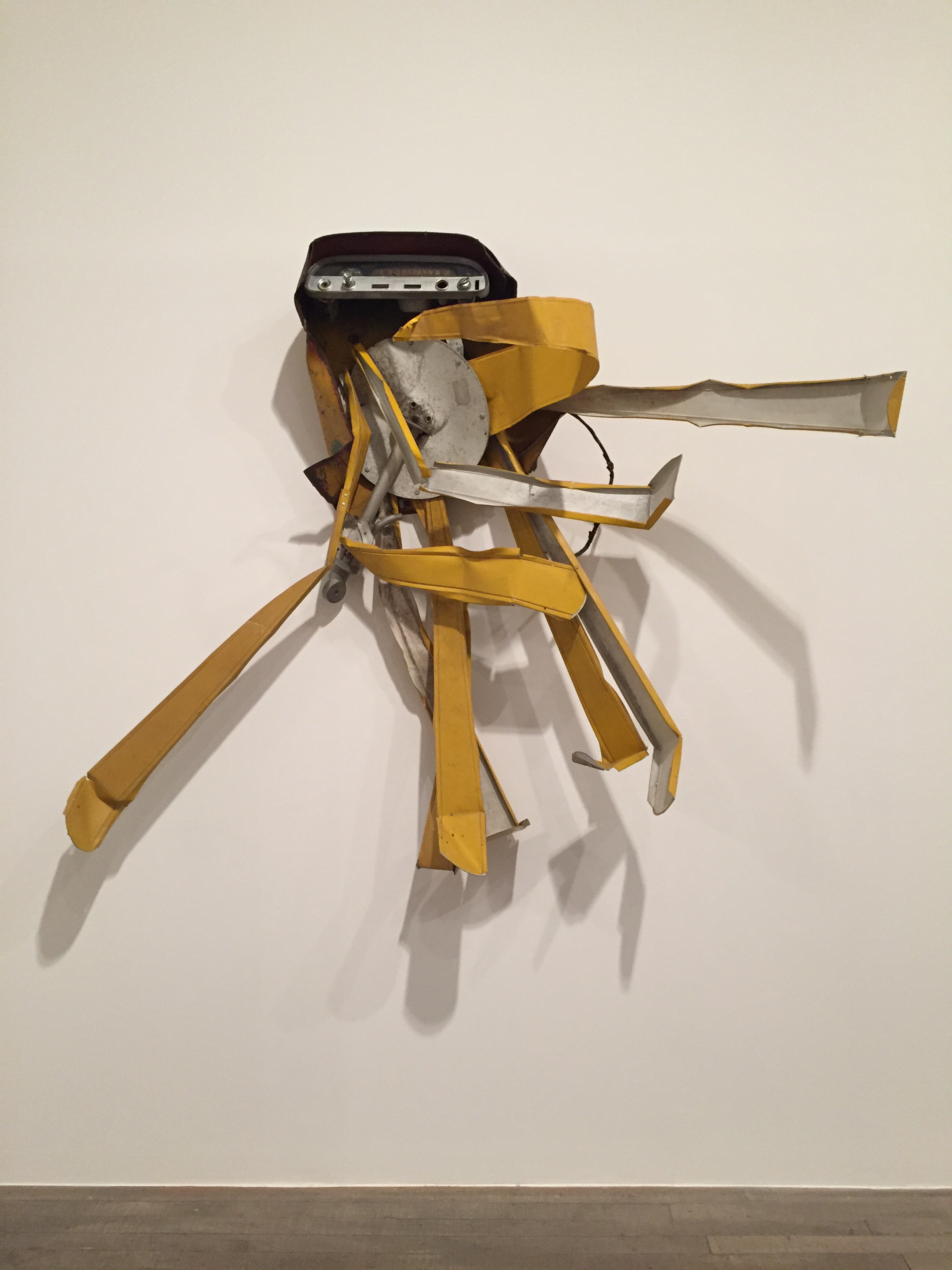
| Glut Data [1986] |
Glut series made from effect of oil crisis on Rauschenberg's home state - texas
Metal parts - reinvented, distorted
Oil cans, car parts, signs
 |
| Untitled (Spread) [1953] |
 |
| Series of smaller works: Poster for ROCI [1988-89] |
Some on aluminium panels
 |
| Sunset Glut [1987] |
Room 11: Late Works
Photography became increasingly important
Many images refer to motifs of his past
his collaborative, generous and experimental approach to art making, he anticipated the social, networked and media-driven culture of today
 |
| Port of Entry [1998] |
Manipulated imagery for a painterly effect
 |
| Untitled (Scenario) [2006] |
EXHIBITION REFLECTION
The key things that stood out to me was Rauschenberg's combination of ideas. There are many layers and much thought that goes into his work. I was inspired by his layering and colour palettes and the use of everyday materials in his work.
I want to create two pieces in response to Factum I and Factum II as I hope this will teach me more about my practice. There is reoccurring use of 3D in Rauschenberg's work through texture as well as actual objects. He layers works and layers materials. Sometimes manipulating the materials - something I have been trying in my work (cutting canvas/painting on back of canvas)
Used a lot of fabric - extra material I could bring into my work
Wolfgang Tillmans
Tate Modern
Photography of everyday life
Displayed prints as whole room installations
experimental approaches to image making
work engages us with themes of community, sociability, empathy, vulnerbility
Room 1:
Static interference
Black and white images, actually colourful when viewed close up
Room 2:
Works made around the studio
Physical process of making photographs
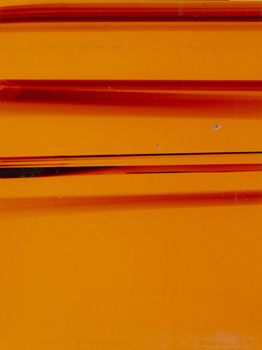
Potential to create abstract pictures without the camera
Room 3:
Looking at world with fresh eyes, travelled to places unknown to him and familiar places as if there for the first time
Communal spaces, people, animals
Record the world, empathetic understanding
Room 4:
Global events eg. Iraq weapons of mass destruction clain - interested in assertions made by individuals
Provocative, juxtapositions
Fake news
Physchology
Room 5:
Abstract works - looking inwards
Rudiments of photographic processes and their potential to be used as a form of self-expression
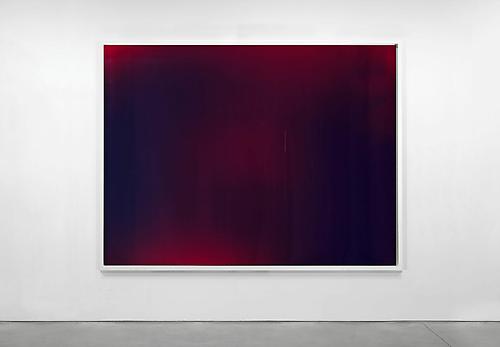
Without a camera - traces light directly onto photographic paper in the darkroom - record of the physical gestures involved in their construction, but also suggest aspects of the body
These images look scientific, this interpretation is important dissacociates the work from traditional gestural technique of painting
Room 6:
Social life, participation in society
Freedom
Room 7:
Playback room - space designed for listening to recorded music
Room 8:
Abstraction
Coexistance of chance and control involved in his process
Found ways to resist the idea that the photograph is solely a direct record of reality
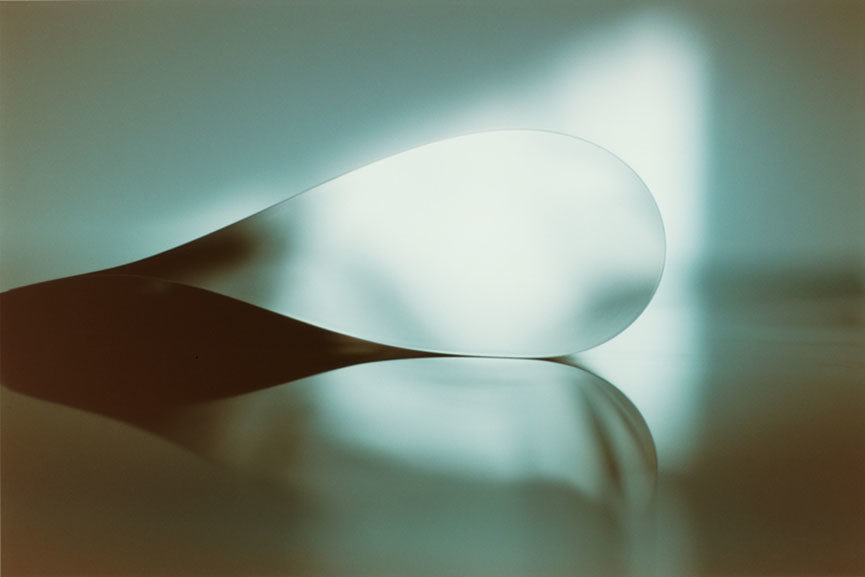
Created a book 'Abstract Pictures' poured ink into wrong places, ran machine without parts to create random effects
Some pictures made with camera, some without
Does not distinguish between the abstract and the representational - interested in what they have in common
Room 9:
Posters, leaflets, magazines, exhibition catalogues - allow him to present work and angage audiences in a completely different manner
Printed page is as valid a venue for artistic creation as walls of museum
Room 10:
Attentiveness to textures and surfaces
Focus on intimate details
Pinning and taping work to the wall as well as frames - attention drawn to edges of the print - encourages viewer to interact with the print as an object
Room 11:
Coexistance of personal, private, public and political spheres in our lives
Room 12:
Performance become more prominent starnd of his practice
Room 13:
Portraiture - collaborative act that has a good levelling instrument
Vulnerability, exposure, honesty, self-conciousness
Room 14:
current global/political tensions
 |
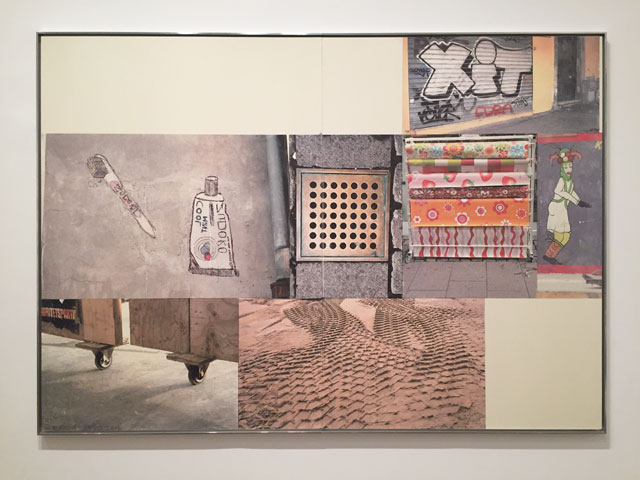
| Market I [2012] |
 |
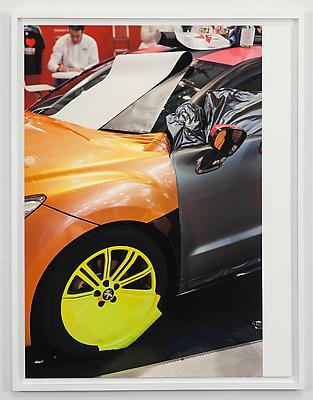
| Fespa Car [2012] |
 |
| Buenos Aries [2010] |
 |
| Silver 94 [2013] |
Sculptural pieces
EXHIBITION REFLECTION
When viewing the Tillmans exhibition, the curation felt deliberately very busy and crammed. I found this unique and interesting. The images instantly started to bounce off of each other, creating a dialogue between the abstract works and the figurative, descriptive images.
Tillmans is interested in exploring the boundaries of photography, considering indepth contexts such as poverty and politics, however much of his work I found very poetic and as a painter I appreciated the works purely for their aesthetic qualities instead of their photographic properties or their context.
I particularly liked his work Market I [2012], this was one of the largest images and up close you could appreciate every individual captured in this moment, I felt I could look at each persons face and be consumed by there emotion and expression, almost becoming a part of the work myself. I was also fascinated by his abstract works created by interruptions and deliberate errors made with and without a camera. As an abstract artist myself, I was intrigued by his attempts at abstraction. These works emphasised the importance of colour and detail throughout the exhibition, each one highlighting a part of another photograph. Eg. emphasising the man wearing the blue poncho in Market I, or making the yellow wheel of Fespa Car even more vibrant. This exhibition was clearly very well curated and it felt the curatorial aspect was as important as each individual photograph alone.
An idea I found particularly interesting about his work was that it was described as not distinguishing between the abstract and the representational but interested in what they have in common. Almost blurring the boundary between the two, to create really beautiful and relatable images. I find in abstract work, the potential of recognisable images can make the pieces more interesting to the viewer and more relatable. In my own paintings people often find landscapes, animals and faces. These depictions are never deliberate, however they are often the ones viewers have found most interesting. They are able to really involve themselves in the painting, appreciating all different elements of the work.
(Quick look in)
Louise Bourgeois
Tate Modern
Interest in textiles
Visited the same themes over and over again - love, fear etc but materials varied greatly
 |
| Untitled [1996] |
Cloth, Rubber, Steel, and Mixed Media
EXHIBITION REFLECTION
Even though this exhibition has no direct influence on my practice I thought it would be interesting to see what was on show. Louise Bourgeois has been a very influential artist and I have researched her practice in the past. Bourgeois reoccurring use of pink throughout the exhibition is a real contrast to the unnerving spider sculptures. Pink is considered a peaceful and subtle colour which is very interesting amongst the manmade steel sculptures really highlighting the ideas of love and fear throughout her work. Pink is often a misconceived and taboo colour, susceptible to stereotyping such as feminist or gay. This is something I have found challenging in my own work, breaking away from such notions. (For more on pink in art see Research File > Books)
Peter McDonald
Kate MacGarry Gallery
Mushrooms of Language
Title comes from Henry Munn book Hallucinogens and Shamanism - use of hallucenogenic mushrooms to achieve trance like states for contacting supernatural world
 |
| Night Queue [2015] |
 |
| Kiss [2016] |
 |
| Mushrooms of Language |
In this painting we see the artist sitting amongst a vast array of tiny painting, basking in the moment
"The viewer is wrong footed as they oscillate between seeing flat paintins and navigating the obtuse space of the studio. This duality of expansion and dislocation is critical to McDonald's work."
Pictoral space beyond rational logic
perspective is mutated through different viewpoints
The characters transparent heads begin to combine with objects and their environment - psychedelic experience
Subejct is the everyday, triggered by real life experiences. Themes: reproduce, mutate, spread
Intense colour and universal subject matter
Lucid realism with vivid distortions
References to modern life eg. phones, queueing, cafes
Playfully explore perspective and form
I also signed up to the Kate MacGarry mailing list to keep up to date with upcoming shows that I might be interested in.
EXHIBITION REFLECTION
From looking at photographs of the artists previous work, I was unsure about whether the mushroom heads by Peter McDonald would be up my street. However, after seeing these works in person the colours were vibrant and you could see the precision used by the artist to create these unique shapes.
The colours are vivid and complimentary. The work is bold and busy - ideas that are also important in my own works. While being quite obviously figurative, McDonald's works hint to abstraction due to their importance of shape and colour.
Richard Tuttle
Stuart Shave//Modern Art
My Birthday Puzzle
Private View Thursday 30th March 2017
I wanted to visit Tuttle's latest exhibition, however I was only in London for the opening night. I got in contact with the gallery ensure it would be ok to come along to the private view.
Two new bodies of work
 |
| Releasing: Biologically Poor Endings, VII [2016] |
 |
| Pressing: Hole in the Head, VII [2015-16] |
EXHIBITION REFLECTION
There is an apparent context of creating something out of nothing, while also trying to push the boundary between sculpture and painting. I love Tuttle's varied use of materials from wood and paper to ping pong balls. Anything could become a piece of artwork in this sense. Tuttle maintains an awareness for the viewers experience, this is obvious by the curation of the exhibition. Some works are placed up high so the viewer must look at it from below, others were placed right on a corner in order for it to be viewed from the side. I photographed most of the works from all different angles due to the 3D nature of the work. This demonstrated that often the angle that the work was at its best was not the traditional front on view. There were interesting ideas of peeling and sticking and bending that begin a conversation with the viewer about the physical creation of the work. One can imagine the artists hand tearing at the work and as a result appreciate the deliberation over every movement and brushstroke. There is attention to detail, exploring line, texture, colour and shape. These aren't just artworks made out of nothing, they are delicately designed to create a poetic piece. Important aspects of Tuttle's work include "drawing beauty out of humble materials, reflecting the fragility of of the world".
http://www.pacegallery.com/artists/474/richard-tuttle
Secundino Hernández
Victoria Miro
Paso
Private View Thursday 30th March 2017
 |
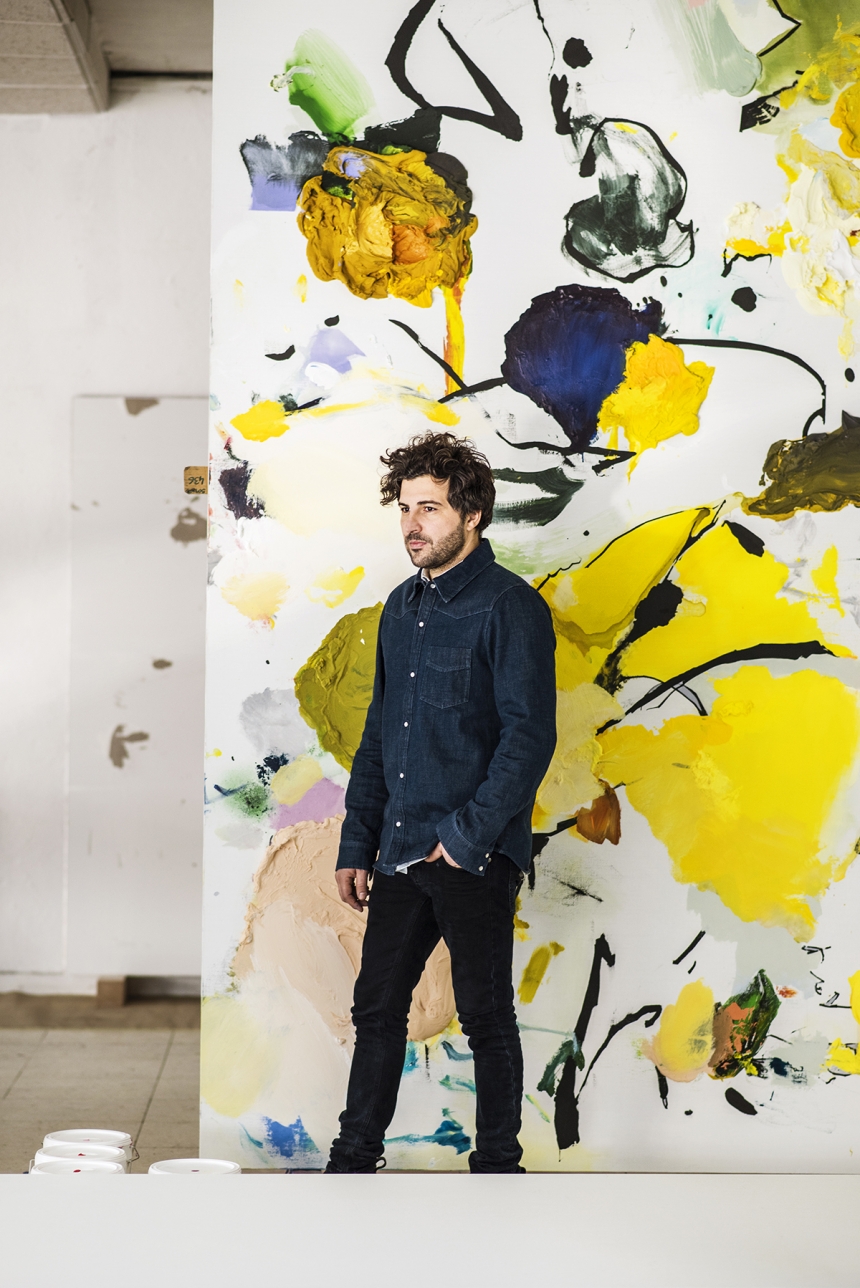
| Artist in front of Untitled [2016] |
 |
| Untitled [2017] |
 |
| Rojo [2016] |
 |
| Untitled [2016] |
 |
| Untitled [2017] |
 |
| Untitled [2017] |
New abstract paintings - figurative ones shown at Mayfair location
Paso - exhibition title - means 'step' - series of movements through abstraction and figuration
Investigation into gesture and form, extending innovative techniques of accumulation and removal
Dramatic contrast of colour and scale
Some based around primary colours (ground floor) red, yellow, blue, contrasted to one monochrome palette
Intense impasto surface is created slowly over time
Restage and reset our method of looking - shared subtleties in paintings
First floor - monochromatic paintings
exploratory quality, removed paint with a pressure washer
Archaeological - artist erases pigment to expose canvas
Something natural and raw about the works
Openly display the triumphs and struggles of the artist's practice
Artist does not aim for politeness in his work - unique process - mad freedom - beyond the restraints of authorial control
Tension between calculation and spontaneity
Hernández says "When the works succeed I don't see geometric shapes anymore. I see a dance between pictorial languages and a balance between something else which is accidental"
Also on the first floor is a monumental, richly coloured painting
Largest colour palette to date
Highly visceral accumulation of pigment
"diary of everyday life in the studio"
extended version of the artist's palette
EXHIBITION REFLECTION
I really enjoy this exhibition, one of my favourites I have seen this unit. It inspired me to want to work even bigger
The paint was applied so thickly, reminded me of the work of Jason Martin. Different to my paintings - don't need actual thickness to build up texture and depth in my work. It is possibly actually more skilled to be able to give the illusion of depth and texture without the physicality of it
Some stick to a primary colour palette - much like I stick to my own colour palette
Different to any other 'abstract' paintings I had seen before (eg in comparison to Tate Abstract Expressionism show I visited last unit).
Rana Begum
The Sainsbury Centre for Visual Arts
Begum's work focuses on light, space and colour. At the beginning of the exhibition you were given the option to wear a fluorescent jacket to change the colour and appreciation of the works.
No. 670 [2016] 'mesh installation' - transforms the gallery space and created an environment in which as a viewer I was able to connect with the space and participate with the work as I was amongst it.
The reconfigured grids create a maze in what would usually be a very light and open-plan gallery space. Begum has managed to adapt the environment to "make the spectator more visually aware of the space they are situated in". This idea is replicated throughout all of the artist's works, with space being an important element to the pieces.
 |
| Commissions |
Begum's 'fold' pieces are one of the main pieces to me that emphasised her idea of blurring the boundary between painting and sculpture. There is an importance put on colour as well as form.
These works are also responsive to light - a reoccurring theme throughout her work. This piece responded to the light in the space, the reflection in the work changing your appreciation of the space around you. The colours of the piece reflect onto the gallery wall behind, creating almost a halo or colourful shadow. White is a great reflector of light, hence why the colours are reflected so visibly. Begum's pieces responded differently to the natural light as opposed to the artificial light.
The layout of the space allowed all pieces to compliment each other, creating a flow throughout the space.
These two-toned pieces unlocked a range of colour possibilities, each piece reacting differently in the light changes. No. 161 [2008] a collection of 16 sticks of of coated aluminium replicate the light and shade of the setting (the fluorescent yellow on the side facing the window, the colours emphasised by the natural light, and the slate grey on the shaded side facing away from the source of light.) This was the first two-tone of Begum's pieces that I came across in this exhibition. It had a strong effect on me as it was unexpected as I followed through the space.
Exhibition publication notes:
blur boundaries between painting and sculpture
reflection of the works onto the gallery wall behind create a shimmering effect
All of the gallery visits and arist shows I have attended have allowed me to experience current contemporary issues and the practice of other young artists, however it has also inspired me with practical ideas to consider in my own practice where I am able to apply elements of what I have seen and experienced.